-
-
-
-
-
-
-
-
-
The good thing about Indian dance shows
The last bell to the Government school opposite to our office rings. Children come rushing out. A group of around 15 boys are gathered near our building gate. We are curious to see what they are doing. One of the boys tells everyone to give him some space and does a reverse somersault three times. Looking at him, another comes out of the group and does a headstand. Few more boys follow; a lot more dance moves come out. Gradually, there is a healthy B-boying battle going on between the boys. The group disperses after a few stunts leaving me thinking. These boys are not more than 10-12 years old. Unlike mine, they come from a not-so-comfortable background. Some of them don’t even have shoes on. But when they did those moves, I was pleasantly surprised by their attitude and the smoothness with which they moved. It was a healthy competition, each observing and trying to learn from the other. And they have learnt all this by just watching the various dance shows that air on television. The good thing is these boys have found out so early in their lives about what they love to do. Hope they never lose it and shock the world with their moves.
-
25 tips to become a better writer
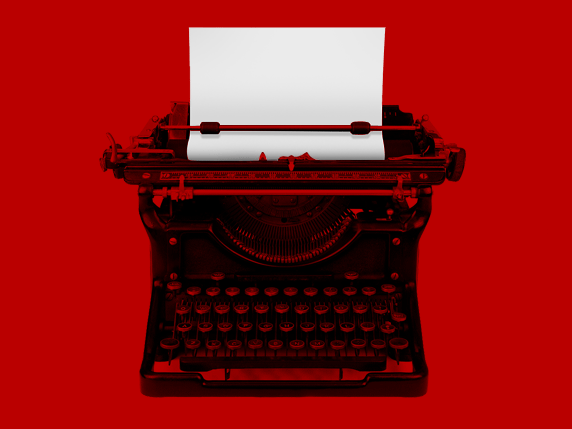
- PD James: On just sitting down and doing it…
Don’t just plan to write—write. It is only by writing, not dreaming about it, that we develop our own style.
… - Steven Pressfield: On starting before you’re ready…
[The] Resistance knows that the longer we noodle around “getting ready,” the more time and opportunity we’ll have to sabotage ourselves. Resistance loves it when we hesitate, when we over-prepare. The answer: plunge in.
… - Esther Freud: On finding your routine…
Find your best time of the day for writing and write. Don’t let anything else interfere. Afterwards it won’t matter to you that the kitchen is a mess.
… - Zadie Smith: On unplugging…
Work on a computer that is disconnected from the internet.
… - Kurt Vonnegut: On finding a subject…
Find a subject you care about and which you in your heart feel others should care about. It is this genuine caring, and not your games with language, which will be the most compelling and seductive element in your style. I am not urging you to write a novel, by the way — although I would not be sorry if you wrote one, provided you genuinely cared about something. A petition to the mayor about a pothole in front of your house or a love letter to the girl next door will do.
… - Maryn McKenna: On keeping your thoughts organized…
Find an organizational scheme for your notes and materials; keep up with it (if you are transcribing sound files or notebooks, don’t let yourself fall behind); and be faithful to it: Don’t obsess over an apparently better scheme that someone else has. At some point during your work, someone will release what looks like a brilliant piece of software that will solve all your problems. Resist the urge to try it out, whatever it is, unless 1) it is endorsed by people whose working methods you already know to be like your own and 2) you know you can implement it quickly and easily without a lot of backfilling. Reworking organizational schemes is incredibly seductive and a massive timesuck.
… - Bill Wasik: On the importance of having an outline…
Hone your outline and then cling to it as a lifeline. You can adjust it in mid-stream, but don’t try to just write your way into a better structure: think about the right structure and then write to it. Your outline will get you through those periods when you can’t possibly imagine ever finishing the damn thing — at those times, your outline will let you see it as a sequence of manageable 1,000 word sections.
… - Joshua Wolf Shenk: On getting through that first draft…
Get through a draft as quickly as possible. Hard to know the shape of the thing until you have a draft. Literally, when I wrote the last page of my first draft of “Lincoln’s Melancholy” I thought, Oh, shit, now I get the shape of this. But I had wasted years, literally years, writing and re-writing the first third to first half. The old writer’s rule applies: Have the courage to write badly.
… - Sarah Waters: On being disciplined…
Treat writing as a job. Be disciplined. Lots of writers get a bit OCD-ish about this. Graham Greene famously wrote 500 words a day. Jean Plaidy managed 5,000 before lunch, then spent the afternoon answering fan mail. My minimum is 1,000 words a day – which is sometimes easy to achieve, and is sometimes, frankly, like shitting a brick, but I will make myself stay at my desk until I’ve got there, because I know that by doing that I am inching the book forward. Those 1,000 words might well be rubbish – they often are. But then, it is always easier to return to rubbish words at a later date and make them better.
… - Jennifer Egan: On being willing to write badly…
[Be] willing to write really badly. It won’t hurt you to do that. I think there is this fear of writing badly, something primal about it, like: “This bad stuff is coming out of me…” Forget it! Let it float away and the good stuff follows. For me, the bad beginning is just something to build on. It’s no big deal. You have to give yourself permission to do that because you can’t expect to write regularly and always write well. That’s when people get into the habit of waiting for the good moments, and that is where I think writer’s block comes from. Like: It’s not happening. Well, maybe good writing isn’t happening, but let some bad writing happen… When I was writing “The Keep,” my writing was so terrible. It was God-awful. My working title for that first draft was, A Short Bad Novel. I thought: “How can I disappoint?”
… - AL Kennedy: On fear…
Be without fear. This is impossible, but let the small fears drive your rewriting and set aside the large ones until they behave – then use them, maybe even write them. Too much fear and all you’ll get is silence.
… - Will Self: On not looking back…
Don’t look back until you’ve written an entire draft, just begin each day from the last sentence you wrote the preceeding day. This prevents those cringing feelings, and means that you have a substantial body of work before you get down to the real work which is all in… The edit.
… - Haruki Murakami: On building up your ability to concentrate…
In private correspondence the great mystery writer Raymond Chandler once confessed that even if he didn’t write anything, he made sure he sat down at his desk every single day and concentrated. I understand the purpose behind his doing this. This is the way Chandler gave himself the physical stamina a professional writer needs, quietly strengthening his willpower. This sort of daily training was indispensable to him.
… - Geoff Dyer: On the power of multiple projects…
Have more than one idea on the go at any one time. If it’s a choice between writing a book and doing nothing I will always choose the latter. It’s only if I have an idea for two books that I choose one rather than the other. I always have to feel that I’m bunking off from something.
… - Augusten Burroughs: On who to hang out with…
Don’t hang around with people who are negative and who are not supportive of your writing. Make friends with writers so that you have a community. Hopefully, your community of writer friends will be good and they’ll give you good feedback and good criticism on your writing but really the best way to be a writer is to be a writer.
… - Neil Gaiman: On feedback…
When people tell you something’s wrong or doesn’t work for them, they are almost always right. When they tell you exactly what they think is wrong and how to fix it, they are almost always wrong.
… - Margaret Atwood: On second readers…
You can never read your own book with the innocent anticipation that comes with that first delicious page of a new book, because you wrote the thing. You’ve been backstage. You’ve seen how the rabbits were smuggled into the hat. Therefore ask a reading friend or two to look at it before you give it to anyone in the publishing business. This friend should not be someone with whom you have a romantic relationship, unless you want to break up.
… - Richard Ford: On others’ fame and success…
Try to think of others’ good luck as encouragement to yourself.
… - Helen Dunmore: On when to stop…
Finish the day’s writing when you still want to continue.
… - Hilary Mantel: On getting stuck…
If you get stuck, get away from your desk. Take a walk, take a bath, go to sleep, make a pie, draw, listen to music, meditate, exercise; whatever you do, don’t just stick there scowling at the problem. But don’t make telephone calls or go to a party; if you do, other people’s words will pour in where your lost words should be. Open a gap for them, create a space. Be patient.
… - Annie Dillard: On things getting out of control…
A work in progress quickly becomes feral. It reverts to a wild state overnight… it is a lion growing in strength. You must visit it every day and reassert your mastery over it. If you skip a day, you are, quite rightly, afraid to open the door to its room. You enter its room with bravura, holding a chair at the thing and shouting, ‘Simba!’
… - Cory Doctorow: On writing when the going gets tough…
Write even when the world is chaotic. You don’t need a cigarette, silence, music, a comfortable chair, or inner peace to write. You just need ten minutes and a writing implement.
… - Chinua Achebe: On doing all that you can…
I believe myself that a good writer doesn’t really need to be told anything except to keep at it. Just think of the work you’ve set yourself to do, and do it as well as you can. Once you have really done all you can, then you can show it to people. But I find this is increasingly not the case with the younger people. They do a first draft and want somebody to finish it off for them with good advice. So I just maneuver myself out of this. I say, Keep at it. I grew up recognizing that there was nobody to give me any advice and that you do your best and if it’s not good enough, someday you will come to terms with that.
… - Joyce Carol Oates: On persevering…
I have forced myself to begin writing when I’ve been utterly exhausted, when I’ve felt my soul as thin as a playing card, when nothing has seemed worth enduring for another five minutes… and somehow the activity of writing changes everything. Or appears to do so.
… - Anne Enright: On why none of this advice really matters…
The way to write a book is to actually write a book. A pen is useful, typing is also good. Keep putting words on the page.
Via The 99 Percent.
- PD James: On just sitting down and doing it…