• The thing about imposter syndrome

    The mistake is thinking imposter syndrome is a phase.

    I’ve learnt that the goal isn’t to “overcome” imposter syndrome. That framing itself is exhausting. The real task is learning how to keep working while it sits beside you.

    For me, imposter syndrome shows up most when I pause to evaluate myself. So I reduce pauses.

    I focus on the next small, concrete task. I try not to focus on how this will be judged. Just: what is the next thing that needs doing?

    Action shrinks the noise. Reflection amplifies it.

    I also stopped using confidence as a prerequisite. Some days you don’t feel ready. You work anyway. Readiness often arrives after movement, not before.

    Another hard truth: imposter syndrome feeds on isolation. When everything stays in your head, the voice sounds authoritative. The moment you put work out, it loses some power. Reality pushes back. 

    And finally, I stopped treating the feeling as a signal to stop. Most of the time, it’s just a sign that I’m operating near the edge of my ability, which is usually where learning happens.

    I feel imposter syndrome doesn’t need to be cured. It needs to be ignored just enough for the work to continue.

  • Why do we feel like this?

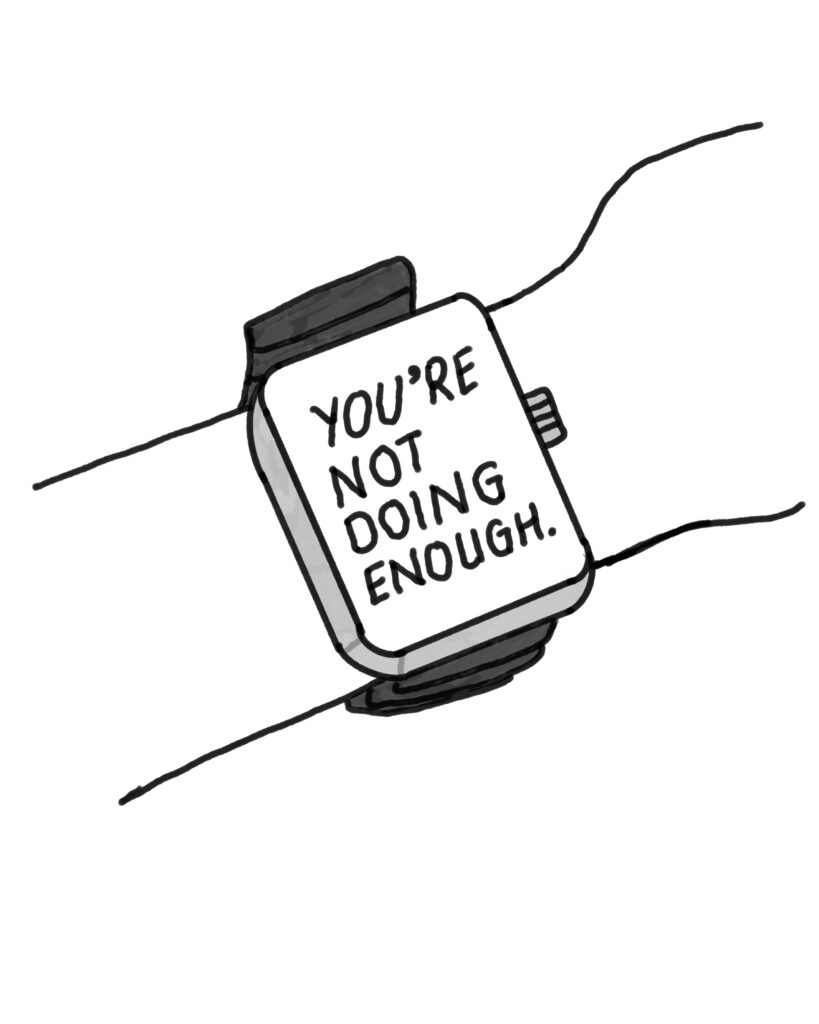
    We’ve been thinking about this sentence a lot this year.

    Here’s why we keep saying this to ourselves, before anyone else does.

    1. We keep comparing today’s version of us with a past that no longer exists.
    2. We’ve learnt to treat slowing down as a personal flaw, not a phase of life.
    3. We trust visible effort more than invisible work, even when the invisible work is heavier.
    4. We’ve absorbed timelines that were never meant for real people with real interruptions.
    5. We confuse pressure with seriousness and ease with irresponsibility.
    6. We’d rather accuse ourselves than sit with uncertainty.
    7. We say it first so it doesn’t come as a surprise when the world says it later.

    Read back the list slowly. Notice how little of it is actually personal. What feels like self-judgement is mostly borrowed logic, repeated long enough to sound familiar. That’s usually the tell.

    May this thought pop up way lesser in 2026 than it did it in 2025. Wishing you a great year ahead!


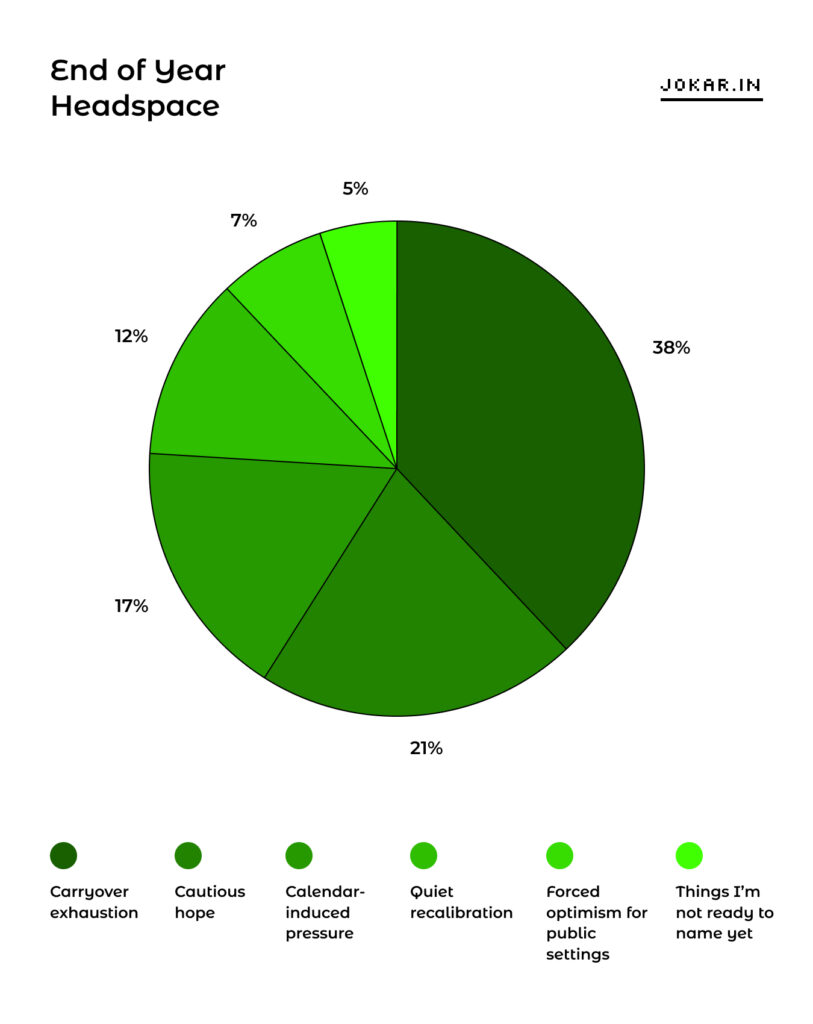
  • What the end of the year usually feels like

    Something strange happens at the end of the year.


  • Every day should be women’s day

    Who is a woman who has inspired your career?

    This one’s too easy.

    I could have picked a “famous” name. But the real answer is Archana. Mere liye toh rockstar hai woh!

    Not because she’s my better half (though that’s a solid bonus), but because she’s the kind of person who makes you question your own excuses.

    She’s faced more unexpected twists and turns in her life than most people I know. But instead of stopping and crying about it, she’s built, rebuilt and reimagined her path. Each and every time.

    She’s kept pushing herself, learned new skills, taken risks, while dragging me out of my doubts more than once.

    Jokar exists because she refuses to settle. Because she sees something bigger for us, even when on some days I am unable to.

    So yes, I didn’t have to think too hard about this one.

    Here’s to the women who make things possible—even when the world throws everything at them.

    Written by Karthik Meenakshisundaram. He is a writer, designer, and creative strategist with 20+ years in advertising, branding, and content. As Jokar’s Co-founder, he explores storytelling, design, and tech—when not overthinking or dabbling in side projects.

  • 7 Sad Ways to be Successful

    Karthik Meenakshisundaram is a writer, designer, and creative strategist with 20+ years in advertising, branding, and content. As Jokar’s Co-founder, he explores storytelling, design, and tech—when not overthinking or dabbling in side projects.

    Since 2003, I’ve been on a treadmill that never slowed down. Eager, hungry and fuelled by ambition. By 2023, I finally stepped off it—not because I was done running, but because I didn’t even like the way it was going, and where it was going.

    Here are 7 sad ways I chased success that became valuable lessons I’ll remember forever.

    Making work my whole identity
    For the longest time, “What do you do?” was the same as “Who are you?” If I wasn’t working or creating, I felt invisible. It’s only in the last few years I’ve started asking myself: Who am I when the laptop’s shut? And I still don’t have the full answer.

    Believing busyness = importance
    From early days in advertising to building Jokar with Archana Karthik, busyness felt like purpose. If I wasn’t “in demand”, I questioned my worth. Now, I see all those late night deadlines and packed schedules for what they really were: distractions from bigger, scarier questions about meaning and balance.

    👌 Living for external validation
    Awards, applause, client appreciation, or even the occasional LinkedIn nod, it always felt like proof that I was on the right path. But the emptiness after every achievement was deafening. I spent too much time worrying about how I looked to others, and not enough asking how I felt about myself.

    ✌✌ Chasing the next big thing
    I believed that happiness was always “just one milestone away.” The next project, the next paycheck, the next dream client—surely, one of them would unlock the elusive satisfaction. But the joy I was chasing was always right here—in quiet dinners with Archana, learning Pali at Mumbai University, or losing myself in printmaking class at JJ School of Arts.

    🖐 Ignoring the weight of it all
    I convinced myself that exhaustion was a small price to pay for success. Burnout became a badge of honour. But deep down, I knew I was running on fumes, pretending it didn’t matter. It took stepping back these past few years to see the damage I’d been doing to myself.

    🖐 👍 Turning creativity into currency
    Somewhere along the way, creating became about deadlines, client and metrics. What used to make me come alive now felt transactional. It’s only recently I’ve started creating again for myself—no brief, no audience, no rules—and remembered why I fell in love with it in the first place.

    🖐✌ Thinking success would make me whole
    For two decades, I thought success would fix everything. The doubt, the insecurity, the endless need to prove myself. But it never did. Success isn’t a solution; it’s a moving target. And until you pause and reflect, you’ll keep chasing it, wondering why you’re still not enough.

    These days, I’m learning to value the small things. Building a simple and meaningful life with Archana. Finding joy in every stroke of ink during printmaking. Learning Pali because I am curious about this beautiful language. Success hasn’t disappeared from my life—it’s just shifted. And I think I’m better for it.


  • Feedbacks—Client POV

    Round 1:
    “Ek toh banta hai boss!”

    Round 2:
    “Ek se humara kya hoga?”

    Round 3:
    “Brief pe mat jao, apni akal lagao.”

    Round 4:
    “Picture abhi baaki hai mere dost.”

    Round 5:
    “Sun raha hoon main, ro raha hai tu.”

    Round 6:
    “Aise bade bade campaignon mein aise choti choti baatein hoti rehti hai.”

    Round 7:
    “Feedback dena mera janm siddh aadhikaar hai. Aur woh main dekar rahunga!”

    Aagey ka mat poocho.
    Badi sad story hai.


  • Tiny ideas

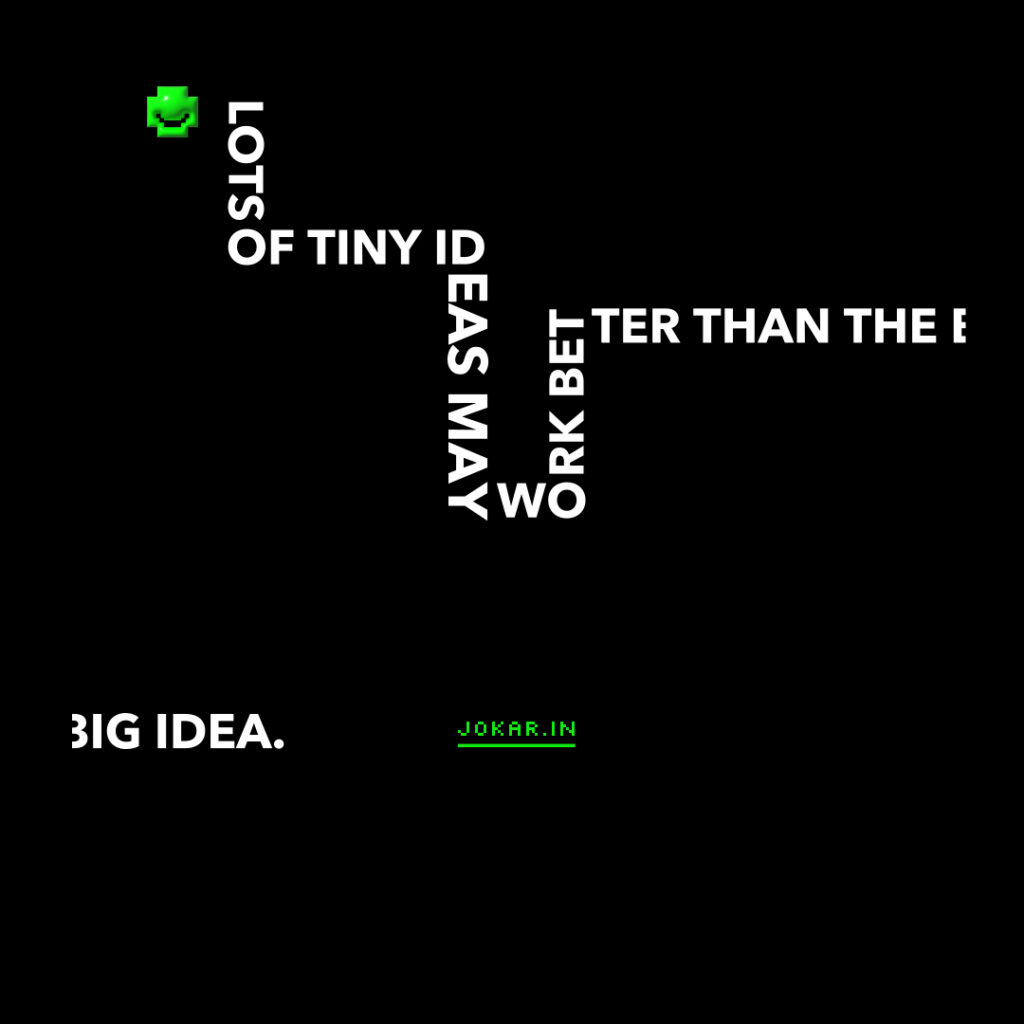
    Lots of tiny ideas may work better than the big idea. Today there are audiences, not just an audience. There are so many languages. So many platforms, all different in some way or the other. One idea fits all may not work anymore. Adapt, but not in the way you usually do.


  • Ask yourself: Why Whine?

    Ask yourself: Why whine?

    What do you get out of it?

    Will things change for the better?

    Does it solve the problem?
    If yes, go ahead, whine. Whine a lot!

    But you know it doesn’t help.
    Not even a bit.

    So ask yourself: Why whine?

    .

    ShukrLekha is a series where we share bite-sized thoughts, each one 4 words long. We dress each thought in a different typeface, to keep things challenging and exciting 🙃

    This typeface is League Gothic available on Google Fonts.


  • Headline ko maaro goli

    To hell with the headline. What if the picture says it all? What if the headline is a part of the image? What if you start with a big chunk of text straightaway? What if, what if, what if? Break format and explore. If nothing else, it will open your mind more.


  • Look out the window

    Look out the window.

    Look at the sky.

    Look at the birds.

    Look at the man peeing on the wall.

    (Ok, maybe not that.)

    Look at the plants and trees swaying in the breeze.

    Look at your own reflection on the glass window.

    Just make sure you look up from your screen often.

    .

    ShukrLekha is our way of sharing 4-worded short messages with cool typefaces. It’s like adding a splash of creativity to our self-reflection moments 🙃

    This typeface is Ostrich Sans available on The League of Moveable Type.