• Just do it

    Don’t wait until everything is just right. It will never be perfect. There will always be challenges, obstacles and less than perfect conditions. So what. Get started now. With each step you take, you will grow stronger and stronger, more and more skilled, more and more self-confident and more and more successful.

    —Mark Victor Hansen

    It’s eerie when you stumble upon a quote which provides an answer to the very question that you are facing at that moment. The funny part is we knew the answer to this, but for some reason chose not to remember it.


  • Why you should do side projects?

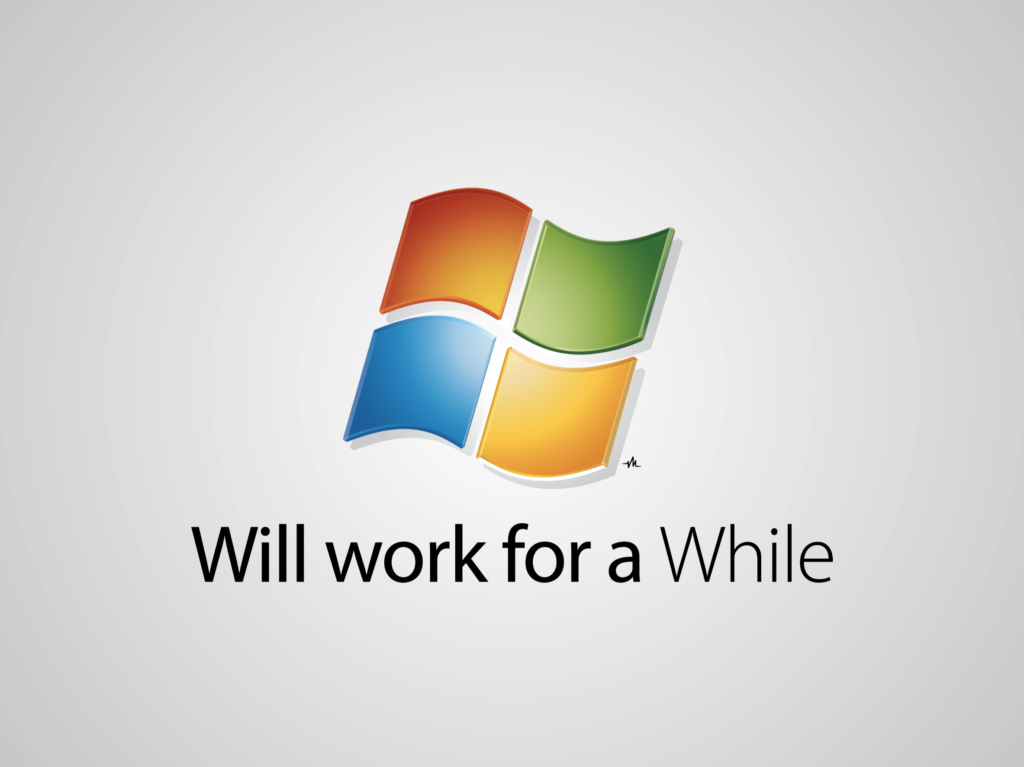
    You know what’s cool? Taking things a bit differently. Viktor Hertz‘s “Honest Logo” series does just that. He plays around with famous logos to show us that being a little unconventional can lead to awesome things.

    Think about it – when Viktor takes famous logos and makes them funny, he’s actually showing us that there’s more beneath the surface. Just like that, we can learn to see things from a fresh angle. Being a little rebellious doesn’t mean just being funny; it means thinking in a way that shakes things up.

    Side projects are like secret playgrounds for our creativity. Just like Viktor’s logo series, they let us try new things without any rules. These projects remind us that trying something different can make our main work even better. So, whether it’s logos or our own ideas, a bit of boldness can go a long way in making things exciting and different.

    Go through the entire series. The Facebook, Apple and Microsoft versions are our favs.


  • Criticism and Critics

    The objections have been so intense and the effort so concerted that it does not feel out of place to ask if there is a deeper intent, a deliberate effort behind all the critiques, objections, characterisations and dirty tricks that the movement is attracting. Nothing is easier in argument than to either characterise the other side with adjectives of your choosing and to inflate a germ of doubt that you can plausibly detect into a full blown epidemic of distrust or try and denigrate the credentials of those one is opposed to and to focus on who they are rather than on the idea that they represent.

    Part of an excellent blog post on criticism by Santosh Desai.

    This part in particular struck a chord with us, as it dives into the world of intense objections and hidden motives. This reflection prompts us to ponder the role of criticism and the strategies often used in such discussions.

    It highlights a common tactic in arguments – the use of strong labels to paint the opposing side in a certain light. It’s a reminder that it’s easy to throw around labels that fit our narrative, which can lead to an atmosphere of doubt. The notion of blowing a small doubt out of proportion is something we’ve all seen, and it underscores the importance of approaching criticism with a discerning eye, focusing on the underlying intent rather than the emotional language.

    The idea of discrediting the credentials of those we disagree with is another aspect Desai points out. This approach shifts attention away from the actual idea and onto the people presenting it. It’s a tactic that can sidetrack discussions and cloud the real issue. Desai’s perspective encourages us to stay on track and focus on the essence of the argument, regardless of who’s voicing it.

    In the context of creative work, these insights are incredibly relevant. They remind us to approach criticism constructively, evaluating ideas based on their worth rather than getting caught up in the tactics used to present them. Recognizing the strategies that can muddle discussions empowers us to engage in meaningful conversations that lead to growth and innovation.


  • Business Skills for Creatives: Learning from Mike Monteiro’s Talk

    Quotes from Mike Monteiro's talk at Creative Mornings

    If you’re a creative person, especially if you’re just starting out, you’ve got to check out Mike Monteiro’s talk called “Fuck You, Pay Me.” This talk is like a guidebook for creative professionals, showing us that creativity and knowing how business works are like two sides of the same coin.

    Monteiro’s talk is all about making things simple. He wants us to understand that being creative isn’t the whole story. We’ve also got to know how to handle the business side of things. In short, ensure how to get paid for the work you do.

    He tells real stories where not talking about money and contracts properly can cause problems. His stories teach us that clear communication from the beginning is super important.

    The talk hits home the idea that being creative is also about being smart in business. Monteiro’s examples help us see that we need to think of ourselves as both artists and business people. By learning about contracts, talking with clients, and understanding money, we make sure we’re treated fairly for our work.

    In today’s world, with the rise of content creators and the gig economy, Monteiro’s talk is even more relevant. It’s like a roadmap for creative success, reminding us that understanding how business works is just as vital as having talent. So, whether you’re just starting out or looking to up your game, “Fuck You, Pay Me” is a talk you shouldn’t miss. It’s like a friend giving you advice on how to make your creative journey awesome.


  • Anyway

    If you are kind, people may accuse you of selfish, ulterior motives; be kind anyway. If you are successful, you will win some false friends and some true enemies; succeed anyway. If you are honest and frank, people may cheat you; be honest and frank anyway. What you spend years building, someone could destroy overnight; build anyway.

    —Mother Teresa / Keith Kent


  • How does a browser work? A beginner’s guide

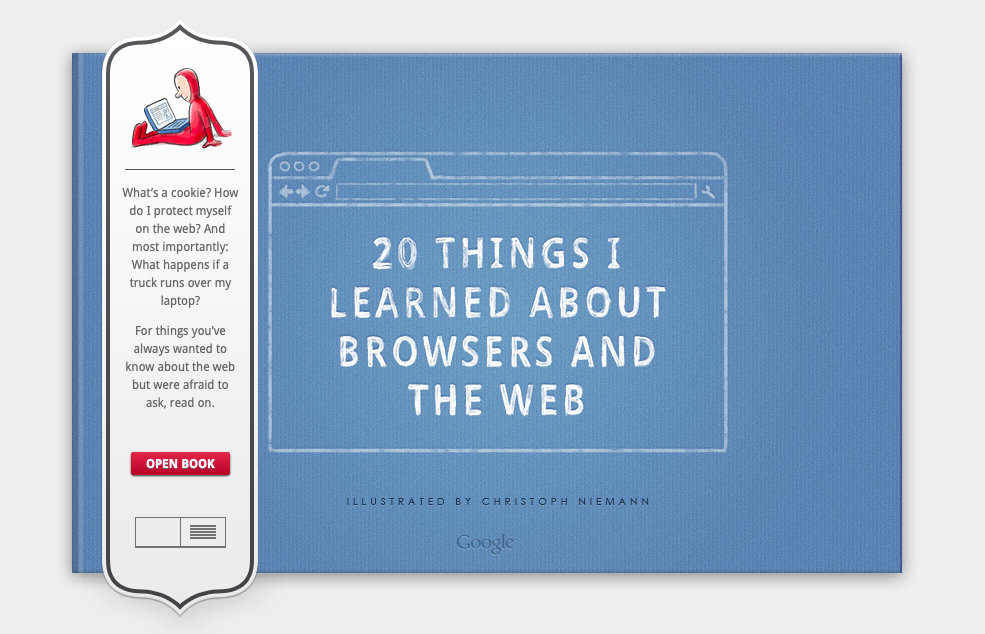
    20 Things I Learned about browsers and the web by Google.

    “20 Things I Learned about Browsers and the Web” was an illustrated book from 2010-11 on things you always wanted to know about the web but were afraid to ask. Illustrated by Christoph Niemann, written by the Google Chrome team, and built in HTML5, this charming guidebook is a handy read about how the evolution of browsers and the web changed the way we work and play online. It’s a great example of how to make “technical” stuff interesting.


  • Build a full website on Twitter

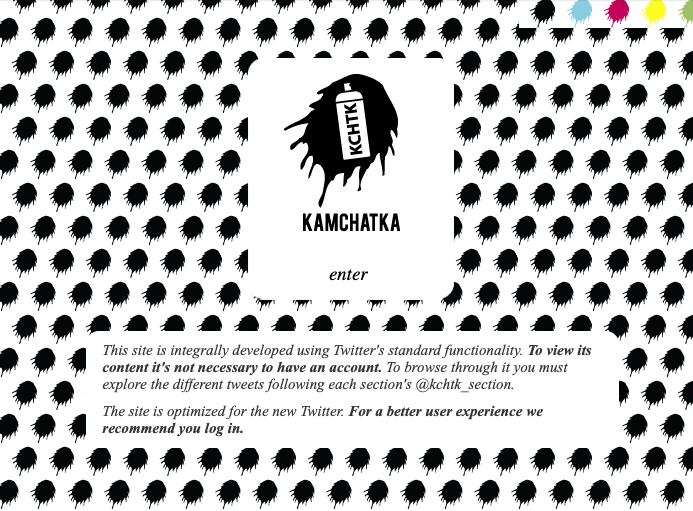
    Kamchatk Argentian digital agency Twitter website

    Kamchatk, an Argentinian digital agency, decided to make their website on Twitter. From a time when Twitter used to be really cool. Watch this demo video they made. At times, it’s a good thing the Internet never forgets.



  • Big Data

    Guy Laurence, ex-CEO Vodafone UK on Data

    A thoroughly engaging article from 2011 by Simon Rogers when the term information overload was new, and big data had not found a place in our daily conversation. Mr. Guy Laurence, then CEO of Vodafone UK shared his unique relationship with numbers and customers in this article, and talked about on how to use data to drive business decisions effectively. The Q&A session at the end, fun 🙂 From the very first issue (Data) of Think series from Google (Think Quarterly), which has now evolved into Think with Google.

    Posting a part of the article here. A fascinating read. Check out the whole thing here.

    A few seconds after midnight on New Year’s Eve, 2010. Numbers start flying across a bank of screens in a large darkened room. London: 1,170,000; Glasgow: 115,000; Manchester: 75,000; Leeds: 70,000… The numbers scroll on as the black-clad tech team look for signs that the system might not be able to cope.

    It could be a scene from futurist cult film Minority Report, but the room is actually a real one – at Vodafone’s state-of-the-art Network Operations Centre in Newbury, Berkshire – and the figures represent the number of texts sent in the first 30 minutes of 2011. This is pure data in action.

    The man responsible for this scene is obsessed with data – because of what the numbers can help him do, rather than with the ones and zeros themselves. “I don’t have a relationship with numbers, I have a relationship with customers,” says Guy Laurence, the 49-year-old who took over as CEO of Vodafone UK in 2009. “I focus totally on human responses to things; if you smack someone in the face, what would they do? If you kiss them on the cheek, what would they do?”

    Laurence took over a company widely seen as stagnating in third place in the UK’s competitive mobile market. Today, Vodafone is viewed as a powerful success story, with more than 19 million customers across the country. When you’ve got that many customers, the big question is: how do you industrialise something that works for each one? “You can always kiss one customer on the cheek – but how do you kiss 19 million customers on the cheek?” he asks.

    Laurence carries only a few numbers in his head: his company’s ‘net promoter score’ (which tells him exactly how well Vodafone is really doing with its customers) and the competition’s market revenue share. “When you run a £5 billion company you can’t avoid numbers – but if you start with numbers you’ll never innovate,” he says. “You have to take the action you think will work and the numbers follow.”

    Even when he’s about to fly off with his family to live rough in the Masai Mara for a week, for Laurence, it’s all about focus. He left school with one grade E A-level, having fluffed his exams by setting up a candle-making business after he realised that “making money was much more fun”. It’s a pattern repeated when he quit his degree to work for independent music publisher Chrysalis. Eventually he became head of distribution and marketing outside America at MGM. His job was to work out which markets a product would work in.

    He will tell you, for instance, that a baseball movie will only work outside the US if it’s shown in Japan. He worked on the Bond films, including GoldenEye, selling them to reluctant cinema owners who hadn’t screened anything from the franchise in six years. “The last film had been [classified as] a 15. Therefore anyone under 21 had never seen a Bond film in a cinema.” So MGM made it cool – selling the film to teenagers, dads and mums simultaneously with targeted campaigns that fuelled interest.

    As Laurence explains, it’s all about making the data work. “I triangulate an objective assessment of the new technologies coming in, a subjective assessment of the public’s reaction to new propositions, and then I take a punt.” This ‘triangulation’ is the combination of hardheaded data analysis, coupled with business nous. Data is something that informs his hunches – but never rules them.

    Setting up the £5-million Network Operations Centre (NOC) in Newbury was the first expression of this approach at Vodafone. “It’s very difficult to touch and feel a network,” he says, “but at the NOC we absolutely live and breathe data in real time.” Managing 90 million calls and 80 million texts on an average day is a tricky business; a typical 24 hours sees Vodafone carry 45 terabytes of data, equivalent to 11.25 million music tracks.

    Vodafone’s approach is to use data to manage demand before things happen. The company’s plans for the Royal wedding in April include adding extra temporary base stations to cope with heavy network usage. When Take That tickets went on sale just before Christmas and the band’s official website crashed due to demand, Vodafone was prepared for the surge of fans texting one another to check whether they’d got their tickets.

    One of the walls at Vodafone’s operations centre shows connections to 217 countries to monitor how much traffic is coming in from abroad in real time. The data shows that different cultures are ‘asymmetric’, says Laurence. “You can see Polish mothers are texting their sons over here to see if they’re okay, but the sons are not texting back,” he says. “But the French are almost symmetrical – so as the texts go out, the replies come back in. As situations unfold in real time in Egypt or Bahrain, we can see how that affects the network, too.”

    Even a bill being sent by email triggers a whole chain of data events: customer gets bill, most open it; some have a query and call the centre. Forty thousand bills go out an hour but if the centre gets hit with too many queries, billings are dialled down to reduce calls in. It’s about fighting the data overload.

    And we are truly overloaded by data. Governments around the world are unleashing a deluge of numbers on their citizens. That has huge implications for big businesses with lucrative government contracts. In the UK, the government recently published every item of public spending over £25,000. Search the database for ‘Vodafone’ and you get 2,448 individual transactions covering millions of pounds. Information that companies once believed was commercially confidential is now routinely published – or leaked to websites like Wikileaks.

    Laurence says he is ‘relaxed’ about increased demands for transparency. “Companies will become more transparent as a necessity – customers now see that as an essential part of the trust equation.” The bigger impact may come from the technology that is making access to this data a mobile phenomenon. “This industry is de-linking access to data from physical location,” he says. In a world where shoppers can check out the competition’s prices while they’re in your store, keeping control of data is no longer an option.

    But for now, managing the information out there is the priority. Access to information was once the big problem, says Laurence. Then it quickly flipped, through technology, to data overload. “We were brought up to believe more data was good, and that’s no longer true,” he argues.

    Laurence refuses to read reports from his product managers with more than five of the vital key performance indicators on them. “The amount of data is obscene. The managers that are going to be successful are going to be the ones who are prepared to take a knife to the amount of data… Otherwise, it’s like a virus.

    “Where did it all go wrong?” he continues. “My kids weren’t taught that huge volumes of data were great. Was there a university professor who stood up and said, ‘If you have over 100 indicators you’re a good boy’? Because whoever that professor is, we need to shoot him.”

    Laurence has just won a wager with his team over the number of Vodafone VIP members who bought tickets for concerts. His team, based on the data, bet on one number. Their boss, based on what he knows about people, thought it would be higher. Data plus hunch equals a powerful combination.

    Or, as Laurence concludes: “Data on its own is impotent.”


  • What type are you?

    This is way back from 2010 by Pentagram Design. If you were cut up into 92 pieces and distributed as a typeface, which type would you be? We’d found our answer then—Cooper Black (emotional, assertive, progressive, relaxed). We wonder what we’d be now. Sadly, the quiz is no longer available due to the discontinuation of Adobe Flash. You can watch it by clicking the video above, though 🙂


  • How to win an argument? Just say Yes.

    Why to argue with someone. Just say, ‘Yes! You are absolutely right!’ Then go ahead and do what you want to do. Just saves so much energy. —Farhan Akhtar

    Arguments – we’ve all been there, right? They can be exhausting and often leave us feeling drained. But what if there was a way to handle them without getting caught up in the back-and-forth?

    Farhan Akhtar shared a gem of wisdom on this in one of his conversations in the first season of the talk show Koffee with Karan.

    When we engage in arguments, it’s like entering a never-ending cycle. It’s like two people pulling on opposite ends of a rope, and neither wants to let go. But what if we shifted our perspective? Instead of seeing arguments as battles to be won, we can consider them as opportunities to understand different viewpoints. Farhan’s advice gives us a way out – a way to avoid the energy drain that arguments often bring.

    Saying, “Yes! You are absolutely right!” need not mean that we lost or someone else’s ideas or opinions are right or better. It’s about choosing where to invest our energy. Some battles aren’t worth fighting, and acknowledging someone else’s perspective doesn’t weaken our position. In fact, it empowers us to focus on what truly matters. And we totally agree 🙂

    So, next time a disagreement comes our way, let’s remember Farhan’s wise words. We can agree, let go of the tug-of-war, and gracefully go our own way. By choosing our battles wisely, we conserve our energy for endeavours that ignite our passions. It’s a simple shift that can lead to a more peaceful and empowered approach to navigating the complexities of life’s discussions.