Category: Business


  • Very important questions

    John Maeda has noted two Georges’ way of thinking about problems in their respective fields–Mathematics and Research. We see both these sets of questions fitting perfectly with marketing, business and life too.

    George Pólya’s questions for problem solving in mathematics:

    Understand the problem
    • What is the unknown?
    • What are the data?
    • What is the condition?
    • Can the problem be solved?

    Assumptions
    • What can you or need you assume?
    • What shouldn’t you assume?
    • Have you made subconscious assumptions?

    Devising a plan of attack
    • Have you seen this or a related problem before?
    • Have you seen a similar unknown before?
    • Can you restate the problem?
    • If you can’t solve this problem, can you solve a similar or simpler problem?

    Aftermath
    • Are you sure of the solution? Can you see it at a glance?
    • Did you use all the data? the whole condition?
    • Can you get the same solution another way?
    • Are there other valid solutions?
    • Can you apply the solution or method to another problem?
    • Was this a satisfying problem to solve?

    .

    George Heilmeier’s list of questions for solving research challenges:

    1. What are you trying to do? Articulate your objectives using absolutely no jargon.
    2. How is it done today, and what are the limits of current practice?
    3. What is new in your approach and why do you think it will be successful?
    4. Who cares? If you are successful, what difference will it make?
    5. What are the risks?
    6. How much will it cost?
    7. How long will it take?
    8. What are the mid-term and final “exams” to check for success?

  • Partnership

    Partnership mein 90% trust to hona hi chahiye. 10% dhoka chalega.

    —Owner, Guru Da Dhaba

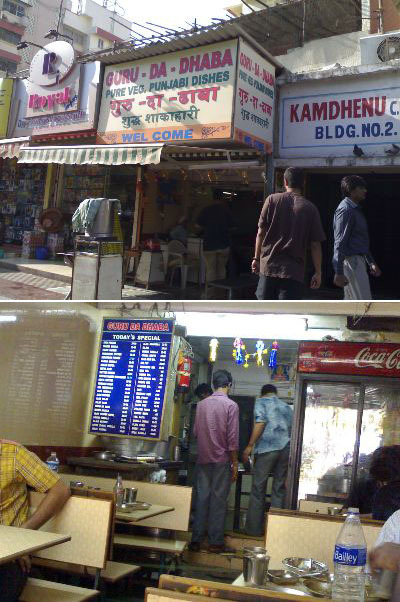
    In a partnership, you need 90% trust. Then, we can make do with 10% of cheating. This wise and practical thought on business partnership came from a soft-spoken Punjabi man who runs a small hotel called ‘Guru Da Dhaba’ in Lokhandwala, Andheri (W), Mumbai. While we were waiting for getting the money back after paying the bill, we shared how we really liked the lip-smacking, tastes-like-home-cooked-food Punjabi fare and asked him why he didn’t he open branches in other parts of the city. The man replied that he and his wife manage this place; children work at big companies and don’t want to sit and run a hotel; and he can start branches if only he could find someone trustworthy to run a place like this. During this piece of conversation, he dropped this gem of a thought. I later realised I never asked his name. There’s always a next time, I guess. Thank you, Sardarji owner of Guru Da Dhaba for the food and sharing your wisdom.


  • Make do

    Failures are often not the result of limitations but the result of our own will. ‘Making do’ is making great design happen, whatever the circumstance.

    Andrew Twigg

    What an end to a very interesting article on how to look at the creative business. This last line makes us wonder whether we can apply the same message to life as well.

    Read the whole article here.


  • Business Skills for Creatives: Learning from Mike Monteiro’s Talk

    Quotes from Mike Monteiro's talk at Creative Mornings

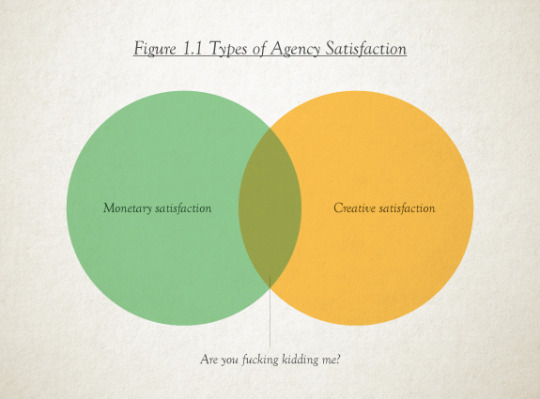
    If you’re a creative person, especially if you’re just starting out, you’ve got to check out Mike Monteiro’s talk called “Fuck You, Pay Me.” This talk is like a guidebook for creative professionals, showing us that creativity and knowing how business works are like two sides of the same coin.

    Monteiro’s talk is all about making things simple. He wants us to understand that being creative isn’t the whole story. We’ve also got to know how to handle the business side of things. In short, ensure how to get paid for the work you do.

    He tells real stories where not talking about money and contracts properly can cause problems. His stories teach us that clear communication from the beginning is super important.

    The talk hits home the idea that being creative is also about being smart in business. Monteiro’s examples help us see that we need to think of ourselves as both artists and business people. By learning about contracts, talking with clients, and understanding money, we make sure we’re treated fairly for our work.

    In today’s world, with the rise of content creators and the gig economy, Monteiro’s talk is even more relevant. It’s like a roadmap for creative success, reminding us that understanding how business works is just as vital as having talent. So, whether you’re just starting out or looking to up your game, “Fuck You, Pay Me” is a talk you shouldn’t miss. It’s like a friend giving you advice on how to make your creative journey awesome.